

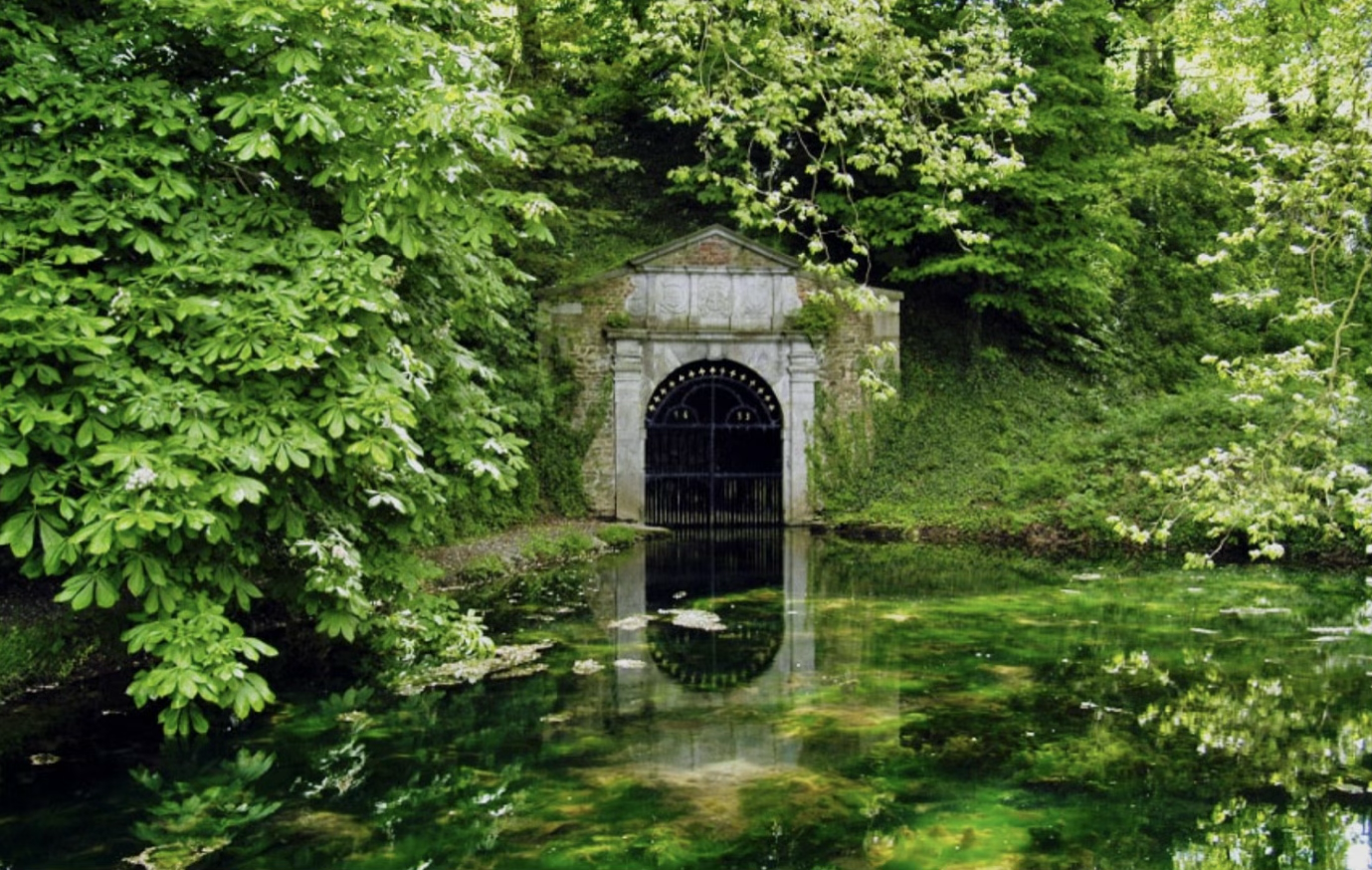
© Allwrite/Tourism Limburg
‘s-Gravenvoeren is located in the Belgian province of Limburg, stretching along the Voer river like a ribbon village. Until the municipal reorganization in 1977, it was an independent municipality, and the village still exudes a certain independence. Perhaps because it was once the administrative center of the medieval county of Dalhem—which in its early days was even called “Voeren.”
Did you know?: A ribbon village is an elongated village that has gradually developed around an important feature in the region. The houses form a continuous ribbon of buildings, typical of villages that have developed along waterways, roads, or dikes.
Later, the village went through several chapters of European history; during the French annexation in 1795, it was incorporated into the department of Ourthe, before passing into Dutch and then Belgian administration. It was not until 1962, when the language border was established, that it officially became part of Limburg.
Cartographer and geographer Philippe Vandermaelen neatly recorded what could be found in ‘s-Gravenvoeren at the time of Belgian independence: 170 homes, 1,238 inhabitants, a church, six mills, two breweries, two distilleries, and a school. Add to that a six-year crop rotation and relatively solid roads with crushed stone, and you have a prosperous village in a nineteenth-century context. Not a bad score, right?
The Molenhoeve was originally the Broekermolen, an overshot watermill that ground grain for the Altenbroek castle estate.
The mill was powered by the water of the Noorbeek and was part of the castle estate’s farm.
Altenbroek is mentioned as early as 1314 as a fiefdom of the Counts of Dalhem. The mill itself dates from before 1800, but the exact construction date is unknown.
1887 – the end of the watermill
In 1887, the watermill was decommissioned.
The building remained and today stands as a tangible reminder of its milling past.
1927 – the Born family arrives at De Molenhoeve
This is a special chapter in your family history.
In 1927, Guillaume Born, your grandfather, came to the estate. He had previously been the tenant of the Molenhoeve farm.
After the departure of the last forest ranger, he moved into the Gatehouse.
The Molenhoeve was then used as a farm, primarily for dairy cattle.
1985 – Guy Born and Albine Halleux
In 1985, your parents, Guy Born and Albine Halleux, became the owners.
Agricultural activities changed, and the farm was mainly used for arable farming.
1991 – a new purpose
In 1991, De Molenhoeve was given a new future.
Guy and Albine gradually converted the former stables into holiday homes.
Thus, the historic farm became a holiday accommodation, with the original buildings taking on a new function.
2021 – Cindy Born and Ron Schoukens take over
In 2021, Cindy and Ron took over the estate.
After a thorough renovation, De Molenhoeve was given a contemporary look, while respecting its rural character.
A year later, two of the four holiday homes were converted into a B&B.
Today, the story continues with six B&B rooms and the further development of the estate with wellness facilities and additional rooms.
The historical timeline

De Molenhoeve served as a flour mill for a long time, until the water wheel finally came to a standstill in 1887. The mill was converted into a house and was given a new purpose in 1927 when the Born family started their farm there.
In 1990, Guy Born and Albine Halleux took the lead in a new direction: the stables were transformed into holiday homes. Molenhoeve became a holiday spot with character and a reference in the region! Since 2021, Cindy Born and her partner Ron Schoukens have added a contemporary touch. With a thorough renovation and the establishment of a charming B&B, they are breathing new life into the estate – without losing the soul of the past.
Another special chapter: the Nail Tree of ‘s-Gravenvoeren. This old horse chestnut was not just any tree, but a folk-healing altar. Anyone with a toothache would rub a nail over the sore spot and then hammer it into the tree. This was believed to transfer the pain to the wood.

Did you know?: In 2015, the tree participated in the European Tree of the Year election – a kind of Eurovision, but for flora. Unfortunately, the tree died in 2018. Only the trunk remains today as a silent witness to a magical belief.
Those who truly want to understand the region should start at the Voer Region Visitor Center in the heart of ‘s-Gravenvoeren. There you will find not only tourist information and regional products, but also a permanent exhibition on the fauna, flora, history, geology, and archaeology of the Voer region. Ideal as a starting point for walks, cycling trips, or simply an afternoon of soaking up culture.
In all its chronology
‘s-Gravenvoeren is more than just the village where Molenhoeve is located – it is a living history book where past and present come together harmoniously. Whether you come for its past, nature, or simply to enjoy the hospitality of Limburg, this charming village on the Voer will certainly not disappoint. And who knows… maybe you’ll feel it too: that touch of magic that still haunts the valley.

